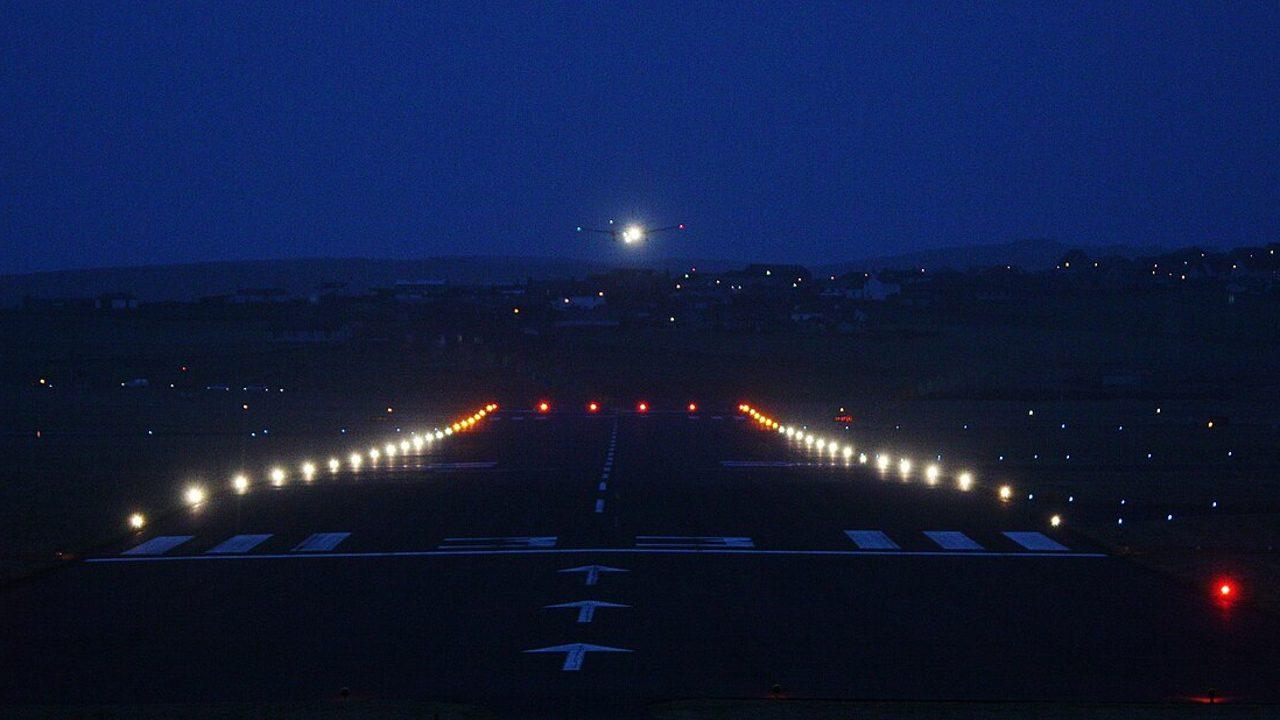
Photo: Ronnie Robertson · CC BY-SA 2.0 · Wikimedia Commons
Aviation news
Delta Atlanta Outage: Understanding Weight and Balance
Published on
On November 22, 2026, a computer outage disrupted Delta Air Lines' entire network in Atlanta, right in the middle of Thanksgiving week. According to Air Journal, the tool responsible for calculating aircraft weight and balance was at fault. This seemingly technical incident ties directly into a concept every CCA candidate needs to understand.
What happened in Atlanta
On Sunday, November 22, 2026, a computer system failure hit the Atlanta-Hartsfield-Jackson hub, Delta Air Lines' main airport. According to Air Journal, the system affected was the one used to calculate aircraft weight and balance, a mandatory step before every departure. The system was restored by late afternoon, but delays piled up for several hours, right during the Thanksgiving traffic peak.
This episode highlights a point often underestimated by CCA candidates: an aircraft cannot take off until its weight and balance have been validated, no matter the reason for the holdup. A computer tool failure therefore has the same effect as a poorly distributed load: the flight stays grounded until the document is available.
Why weight and balance are checked before every flight
The weight and balance sheet, or load sheet, determines where the aircraft's center of gravity sits once loaded: passengers, baggage, cargo, fuel. This figure directly affects how the aircraft behaves during takeoff, in flight, and on landing. A center of gravity outside the approved limits can make the aircraft unstable or reduce the captain's control margins, which is why this document must be validated before the doors close.
The calculation isn't performed by cabin crew, but by ground operations teams, working in coordination with the captain. Even so, this concept is part of the CCA's regulations and general knowledge module, because cabin crew need to understand why certain instructions, whether about loading, passenger distribution, or managing empty seats, exist, and why they're never just a matter of comfort.
The cabin crew's role in load distribution
In the cabin, cabin crew get involved in concrete terms whenever a distribution instruction is given before the flight, for example to balance the number of passengers between the front and back of the aircraft, or to respect a weight limit in a cabin-accessible hold area. These instructions, passed on by the captain or the cabin manager, stem directly from the weight and balance calculation done on the ground.
A crew that understands the logic behind these instructions applies procedures more rigorously than a crew that simply follows them without grasping the reasoning. That's why the CCA emphasizes the “why”, not just the “how”: knowing that a seat needs to stay empty for a balance-related reason prevents sloppy assumptions on the day an unusual instruction comes through right before boarding.
An outage that highlights the ground safety chain
The Delta incident also shows that flight safety depends on a chain of players far broader than just the crew on board. Ground operations teams, computer systems, ramp crews, and the captain are all involved before the first passengers even step on board. When one link in that chain fails, the whole network slows down, as seen in Atlanta over several hours.
For a future cabin crew member, remembering this mechanism helps clarify your own role: cabin crew aren't responsible for the weight and balance calculation, but they do need to understand its operational consequences, particularly during delays, last-minute changes, or unusual distribution instructions given just before the doors close.
Revising this concept before the exam
Weight and balance comes up regularly in questions from the CCA's regulations and general knowledge module, often as a scenario-based question rather than an isolated theoretical one. The free quizzes sorted by module on forallpnc.fr/qcm-cca let you train specifically on this type of question, and the illustrated courses available on forallpnc.fr/cours-cca break down the logic behind every loading instruction.
To check how well you've mastered the whole syllabus, the free 70-question mock exam on forallpnc.fr/examen-blanc-cca remains the best way to see where you stand before the big day. If a point still feels unclear after several readings of the course material, the site's AI Instructor can rephrase the explanation differently, which is useful when a technical concept like this one doesn't click right away.
Keep reading
Aviation news
Flying Blue: why pay with Miles?
Flying Blue now lets you pay with Miles at new partner retailers. This expansion reveals the relationship strategy of Air France-KLM and its
Aviation news
Air France: 1,200 permanent contracts in maintenance
Air France is recruiting over 1,200 permanent staff (CDI) in maintenance by 2028. Here’s what this campaign reveals about the aviation job market for cabin crew.
Aviation news
Transavia launches Brest to Seville: what it tells us
Transavia has launched a Brest to Seville route from the Breton airport. A good opportunity to understand what a new route means for airline bases and staff