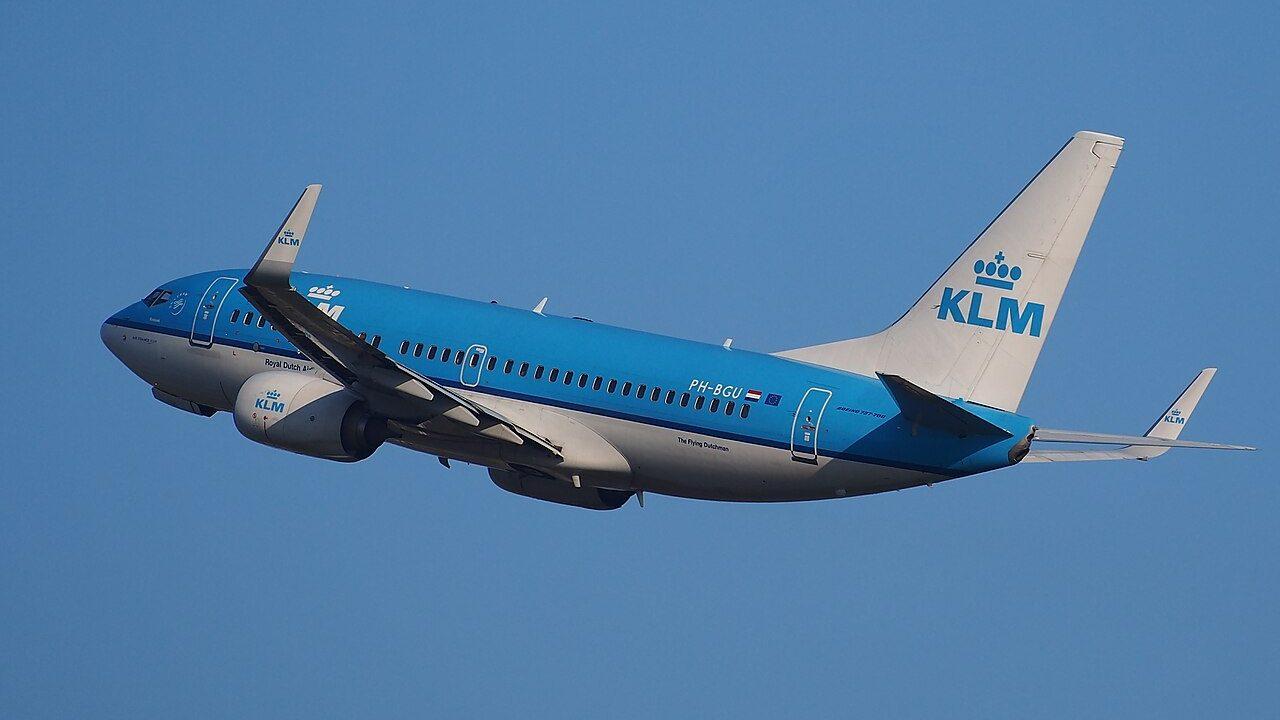
Photo: Alf van Beem · Domaine public · Wikimedia Commons
Aviation news
Flying Blue: why pay with Miles?
Published on
Flying Blue, the loyalty programme of Air France-KLM, has just extended Miles payment to new online shops in France. It may sound like a minor commercial detail, but it actually says a lot about how the group builds its customer relationships, a topic that every CCA candidate would do well to understand before an interview.
What this extension of Miles payment changes
According to Air Journal, Flying Blue members can now pay for all or part of a purchase with Miles on merchant websites that offer the Flying Blue+ option. Several French retailers have joined the scheme, including YellowKorner, Panasonic, Dermalogica and Philipp Plein, with more partners expected to follow in the coming months. In practice, travellers no longer need to wait for a plane ticket or a hotel stay to use the Miles they have built up.
This development fits into a broader trend in the industry: major airlines’ loyalty programmes are no longer limited to air travel. They are becoming full consumption ecosystems, where Miles function almost like a parallel currency. For Air France-KLM, this is a way of keeping customers engaged on a daily basis, even between flights, and of strengthening brand loyalty over the long run.
For a CCA candidate, this kind of announcement is more than just a marketing curiosity. It illustrates an often underestimated side of the job that comes up in interviews: cabin crew are not only cabin safety professionals, they also represent, day to day, their airline’s image and commercial strategy to passengers.
Why cabin crew need to know their airline’s loyalty programme
In recruitment interviews, it is common for a recruiter to ask candidates what they know about the target airline’s loyalty programme. Many candidates give vague answers along the lines of “it lets you collect miles”, without ever connecting the programme to the passenger’s actual experience on board. That is a common mistake: a recruiter is looking for an answer that shows you understand the link between loyalty and the customer relationship in the cabin.
Take a concrete example: a Flying Blue Platinum passenger who flies regularly with the group expects some form of recognition for their status, sometimes a commercial gesture, but often simply a bit of extra attention in the service. Cabin crew who understand that these statuses exist, and the logic behind them, can better anticipate what this type of passenger expects, without needing to know the exact details of the benefits, which is a matter for airline training rather than the CCA.
The practical advice here is simple: before an interview, take ten minutes to look at the loyalty programme page of your target airline on its official website. You do not need to recite points thresholds or commercial partnerships, but you should be able to explain, in one sentence, how the programme ties in with the passenger experience you will be responsible for delivering on board.
Flying Blue, an example of the Air France-KLM group’s strategy
Flying Blue is not exclusive to Air France: the programme is shared with KLM, and to some extent with Transavia for certain benefits, which reflects how the Air France-KLM group is organised as a whole. Understanding this structure helps you place the different subsidiaries in relation to one another, which is useful when preparing an application for one of them rather than another.
A candidate applying to Transavia, for example, would do well to know that the group’s low-cost subsidiary operates with its own bases and its own business model, while still belonging to the same parent structure as Air France and KLM. This interplay between subsidiaries regularly comes up in the general knowledge questions asked in group interviews, where the recruiter is checking that you understand the group’s landscape beyond just the name of the airline you are applying to.
A common mistake is to present Flying Blue as a simple points-collection programme, without mentioning that it now extends to uses far broader than just buying tickets. Being able to place this recent expansion within a broader logic of diversifying the customer relationship gives a more well-rounded answer, and shows that you keep up with industry news, not just the strict content of the CCA.
What this announcement reveals about the group’s cabin crew recruitment
This extension of Miles payment does not directly create cabin crew positions, but it does confirm an active commercial push at Air France-KLM, which continues to invest in the customer relationship at a time when the airline industry remains highly competitive. Airlines that develop this kind of service are generally seeking to build loyalty among a demanding customer base, which also translates into specific expectations placed on cabin crew in terms of service and brand representation.
If you are preparing an application for Air France, KLM or Transavia, the right habit is to regularly check the job listings published on the airlines’ own careers sites, rather than relying solely on one-off announcements picked up by the trade press. ForAllCabinCrew lists these job openings every day on its page dedicated to flight attendant recruitment, and offers a detailed profile for each airline in the sector, including the Air France group, to help you keep track without having to run multiple searches.
Also keep in mind that passing the CCA remains a prerequisite independent of any airline’s commercial news: no marketing announcement, however interesting, can replace the mastery of the regulatory modules, cabin safety and aeromedical knowledge expected on exam day.
Turning this news into concrete preparation
Rather than reading this announcement as a simple piece of business news, you can use it to build a solid case for your interview. For each airline you are interested in, note down two or three recent factual elements: a commercial announcement, a fleet update, a new route launch. This habit lets you answer precisely when a recruiter asks why you chose this airline over another, instead of falling back on generic motivations about a love of travel.
Here is some advice you can apply right away: create a short profile for each target airline, with three simple columns: the loyalty programme, the main bases, and a recent piece of news. Review it just before each interview, without having to cram everything the night before. This method helps you avoid the common mistake of revising only the CCA’s theoretical content while overlooking the business side, which nonetheless features heavily in recruiters’ questions.
Finally, keep in mind that this kind of industry monitoring never replaces the technical preparation needed for the exam. The free quizzes by module and the 70-question mock exam available on ForAllCabinCrew remain the foundation for securing your regulatory knowledge, while you build up your airline culture alongside it.
Keep reading
Aviation news
Air France: 1,200 permanent contracts in maintenance
Air France is recruiting over 1,200 permanent staff (CDI) in maintenance by 2028. Here’s what this campaign reveals about the aviation job market for cabin crew.
Aviation news
Transavia launches Brest to Seville: what it tells us
Transavia has launched a Brest to Seville route from the Breton airport. A good opportunity to understand what a new route means for airline bases and staff
Aviation news
ACMI: 3 airlines shut down, what it means for cabin crew
Three European ACMI/charter airlines have stopped flying in quick succession. Here's what this reveals about the segment, useful to know before applying as cabin crew.