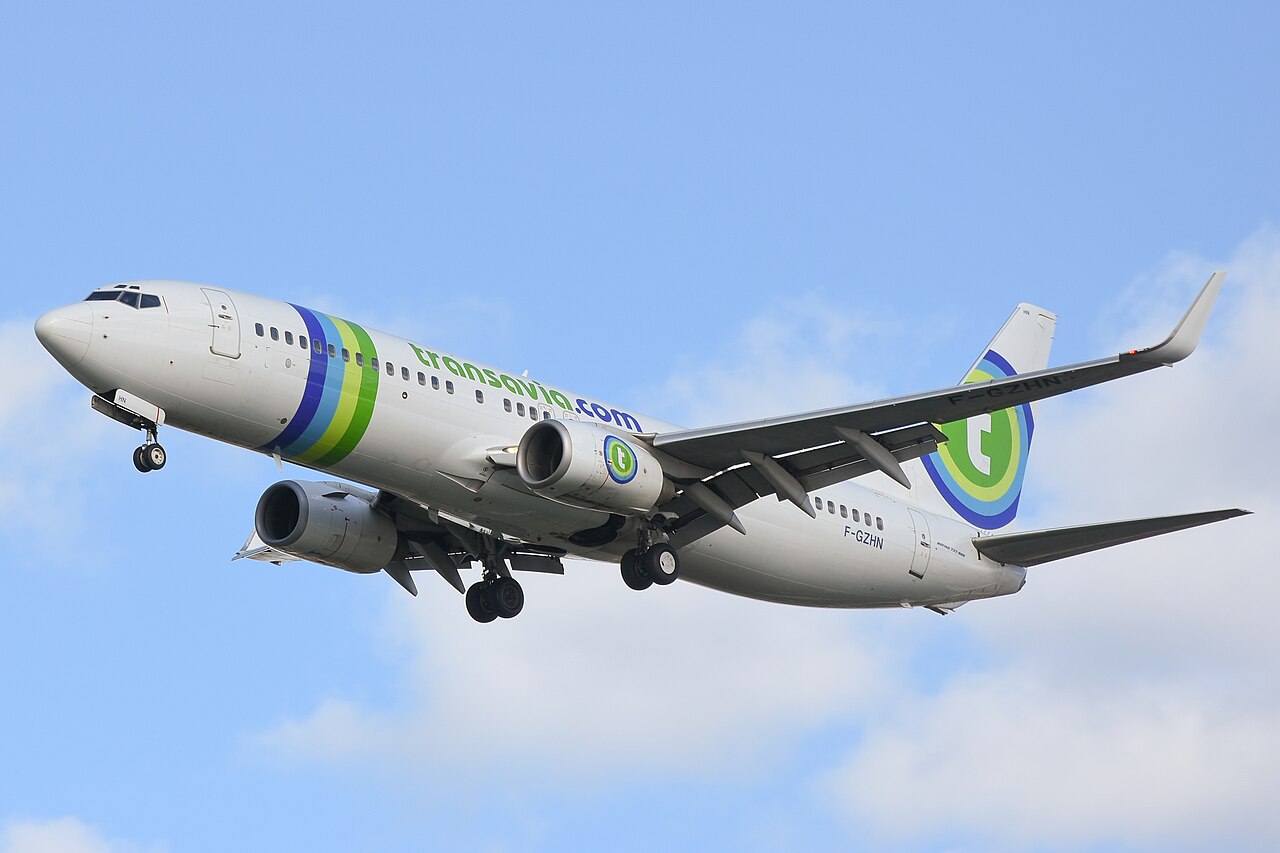
Photo: Hugo LUC · CC BY-SA 4.0 · Wikimedia Commons
Aviation news
Transavia launches Brest to Seville: what it tells us
Published on
Transavia has just opened a direct route between Brest and Seville, marked by a themed evening event at Brest Bretagne Airport. Behind this seemingly minor piece of news lies a mechanism that every CCA (Cabin Crew Attestation) candidate should understand: how an airline builds its network, and what that means for the people flying it.
A new route, an Andalusian evening
According to Air Journal, Brest Bretagne Airport held an Andalusian-themed evening on 19 November to mark the launch of Transavia's new service to Seville. The route, inaugurated on 25 October, operates with two rotations a week during the winter season. Beyond the PR exercise, the airport in Finistère is signalling a broader ambition: to open its terminal up more to local residents, not just to travelers passing through.
This kind of event, common in regional aviation, almost always accompanies the launch of a new route. It helps raise awareness of the destination among the local public, but it also reflects a clear commercial logic: convincing leisure travelers to book a flight that has only just appeared in flight search engines.
Transavia, a subsidiary of the Air France-KLM group
Transavia France is part of the Air France-KLM group, alongside Air France, KLM and HOP!. The airline positions itself in the low-cost, point-to-point segment, with a network covering many regional French cities, unlike Air France, which organizes most of its activity around the Paris-Charles de Gaulle hub. This distinction matters for a cabin crew candidate: bases, flight schedules and the type of customers vary depending on which subsidiary of the group you're looking at.
A route like Brest to Seville is a good illustration of this model: short rotations, a seasonal rhythm, and a leisure-focused rather than business-focused customer base. For cabin crew based in the regions, routes like this one can make up a significant part of the winter schedule, alongside other routes to Spain, Portugal or Morocco.
What opening a new route means for cabin crew
When an airline launches a new destination, it also needs to staff it with the right crew numbers. In practical terms, this means additional assignments at the base concerned, sometimes through internal moves of cabin crew already in post, and sometimes through new hires if activity levels justify it. A twice-weekly route like Brest to Seville is modest on the scale of an entire network, but added to other new routes, it all adds up and puts pressure on cabin crew staffing needs.
For a CCA candidate, understanding this mechanism helps you read recruitment ads more effectively. An airline expanding its regional network generally needs cabin crew spread across several regional bases, not just its main one. This is a factor worth watching when you choose where to apply, especially if you want to avoid ending up at a base far from home.
Finding job openings and the Transavia profile
If you're aiming for a career at Transavia, or more broadly within the Air France group, keeping an eye on new route launches gives useful clues about upcoming recruitment needs. ForAllCabinCrew publishes cabin crew job openings every day, gathered from airlines' careers sites and accessible from the flight attendant recruitment page, along with a dedicated profile for each airline covering its key features.
For recruitment session opening dates, exact criteria or application procedures at Transavia, the airline's official website remains the only reliable source to check. While you wait for a possible application, the most useful thing you can do is strengthen your theoretical knowledge: the CCA is a prerequisite common to every airline in the group, whichever subsidiary you're aiming for.
Keep reading
Aviation news
ACMI: 3 airlines shut down, what it means for cabin crew
Three European ACMI/charter airlines have stopped flying in quick succession. Here's what this reveals about the segment, useful to know before applying as cabin crew.
Aviation news
Air France: 1,200 permanent contracts in maintenance
Air France is recruiting over 1,200 permanent staff (CDI) in maintenance by 2028. Here’s what this campaign reveals about the aviation job market for cabin crew.
Aviation news
HOP! Air France: 60 positions in Clermont
HOP! will be servicing Air France's A220s in Clermont-Ferrand starting in 2027, with 60 new hires planned. What this reveals about the group for a cabin crew candidate.