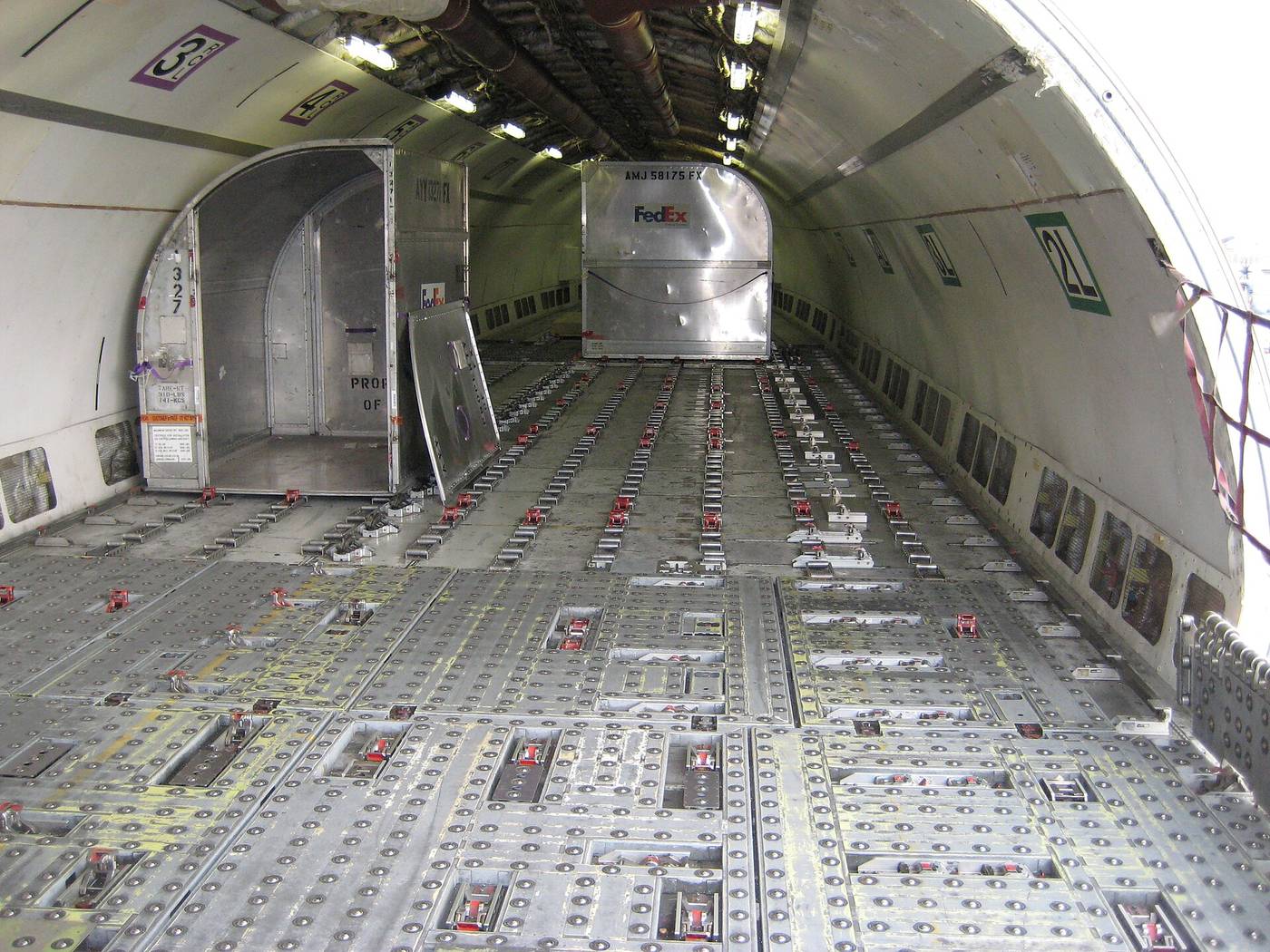
Photo: Mark Baylor · CC BY 2.0 · Wikimedia Commons
CCA revision & exam
CCA dangerous goods: the 9 classes
Published on
The CCA dangerous goods module relies heavily on a classification into nine classes, which you need to be able to recognize without hesitation. Rather than learning a flat list, building a structured mental table helps you retain each class and its associated risks over the long term. Here’s how to organize this memorization, class by class.
Why a table and not just a list
The classification of dangerous goods follows international logic, adopted by ICAO and detailed in IATA recommendations. Each class corresponds to a specific type of hazard: explosive, gaseous, flammable, toxic, radioactive, corrosive. Learning this list in order, without any visual reference point, leads many candidates to mix up the numbers, especially between classes 3, 4 and 5, which are all linked to flammability.
A table with fixed columns changes everything. For each class, you consistently note down four elements: the number, the name of the hazard, a concrete example of something transported by air, and the color or symbol of the associated label. This structure, repeated identically for all nine classes, creates a stable mental pattern that you can reconstruct from memory, even under the pressure of a timed practice exam.
The advantage of this method is that it forces you to treat every class the same way, without neglecting one out of habit. Many candidates know classes 1, 2 and 3 well, since they’re more intuitive, but rush through classes 7, 8 and 9, even though these come up just as often in the module’s exam-style questions.
The nine classes, one by one
Class 1 covers explosive substances and articles, such as certain fireworks or ammunition, strictly regulated or even banned in the cargo hold depending on the type. Class 2 concerns gases, whether flammable, non-flammable or toxic, with examples including medical oxygen cylinders or aerosols. Class 3 brings together flammable liquids, a category that includes many everyday products carried by passengers, such as certain perfumes or solvents.
Class 4 covers flammable solids, substances liable to spontaneous combustion, and those that emit flammable gases on contact with water. Class 5 groups oxidizing substances and organic peroxides, substances that promote the combustion of other materials without being flammable themselves. Class 6 refers to toxic and infectious substances, a category that includes certain medical samples transported under strict conditions.
Class 7 corresponds to radioactive materials, heavily regulated and rarely found in the cabin. Class 8 covers corrosive substances, such as certain batteries or chemical products capable of damaging skin or metal. Finally, class 9 brings together miscellaneous dangerous substances and articles, a catch-all category that notably includes lithium batteries, a topic particularly scrutinized in recent exam questions.
Classic exam traps
The first trap is confusing the class number with the perceived level of danger. A class 9 item is not less serious than a class 1 item: it simply covers a range of miscellaneous risks, notably linked to lithium batteries, a topic that has become central given the growing number of electronic devices carried by passengers. Many candidates underestimate this class because its name sounds vague, even though it comes up very regularly in exam-style questions.
The second trap concerns subdivisions. Some classes, such as class 2 or class 4, are divided into several subcategories depending on the specific hazard. The CCA expects you to be able to place a product in the correct subdivision, not just in its general class. Revising only the nine main classes without going into this level of detail leaves a significant margin for error on practice exam day.
The third trap involves confusing what is prohibited, what is tolerated in the cargo hold, and what is accepted in the cabin under certain conditions. These rules vary depending on the class and type of product, and this is often where points are lost, even among candidates who know the list of nine classes by heart.
Building and using your revision table
For this table to actually be useful, build it yourself rather than copying a ready-made template. The effort of writing it out, class by class, embeds the information far better than passive reading. Take a sheet of paper in landscape format, draw nine rows, and fill in the number, hazard, example and label columns as you work through the module.
Once the table is finished, test yourself by covering one column at a time. Can you find the number just from the example? The label just from the name of the hazard? This rotation of question angles trains you exactly the way exam-style questions will, since they never ask the question the same way from one session to the next.
Follow up this revision with the free quiz for the dangerous goods module at /qcm-cca, which lets you check whether your table holds up against questions phrased differently from your own wording. Then move on to the free 70-question practice exam at /examen-blanc-cca to see how this module fits together with the others, under conditions close to the real test. If some subdivisions remain unclear despite the table, ForAllCabinCrew’s AI Instructor can help you clarify a specific point without waiting for a full course.
Connecting this module to the rest of the CCA
The dangerous goods module doesn’t exist in isolation from the others. It directly overlaps with the fire and smoke module, since several classes involve flammable products that could cause an in-flight fire. It also overlaps with aviation regulations, since the rules on transport, acceptance and declaration are based on specific texts that you need to be able to cite without confusing them with other regulatory obligations of the job.
Revising this module alongside the illustrated courses available at /cours-cca helps you visualize the labels and symbols concretely, rather than memorizing them in the abstract. A label seen once in a photo is often easier to recognize than a text description learned by heart, especially under time pressure during the theory exam.
Related module
- CCA quiz Marchandises dangereuses293 corrected questions
Keep reading
CCA revision & exam
Fire Classes and Extinguishing Agents for the CCA
Fire classes and extinguishing agents: the table you need to know by heart for the CCA fire and smoke module, with memory cues to help you avoid common mistakes.
CCA revision & exam
Hypoxia and Decompression for the CCA: Understanding the Basics
Hypoxia, slow or rapid decompression: understand the mechanisms at play so you can answer correctly on multiple-choice questions in the CCA’s aeromedical module.
CCA revision & exam
ICAO Phonetic Alphabet for the CCA: How to Learn It
Learn the ICAO phonetic alphabet for the CCA without just reciting it: an effective method, common pitfalls and links to aeronautical communication