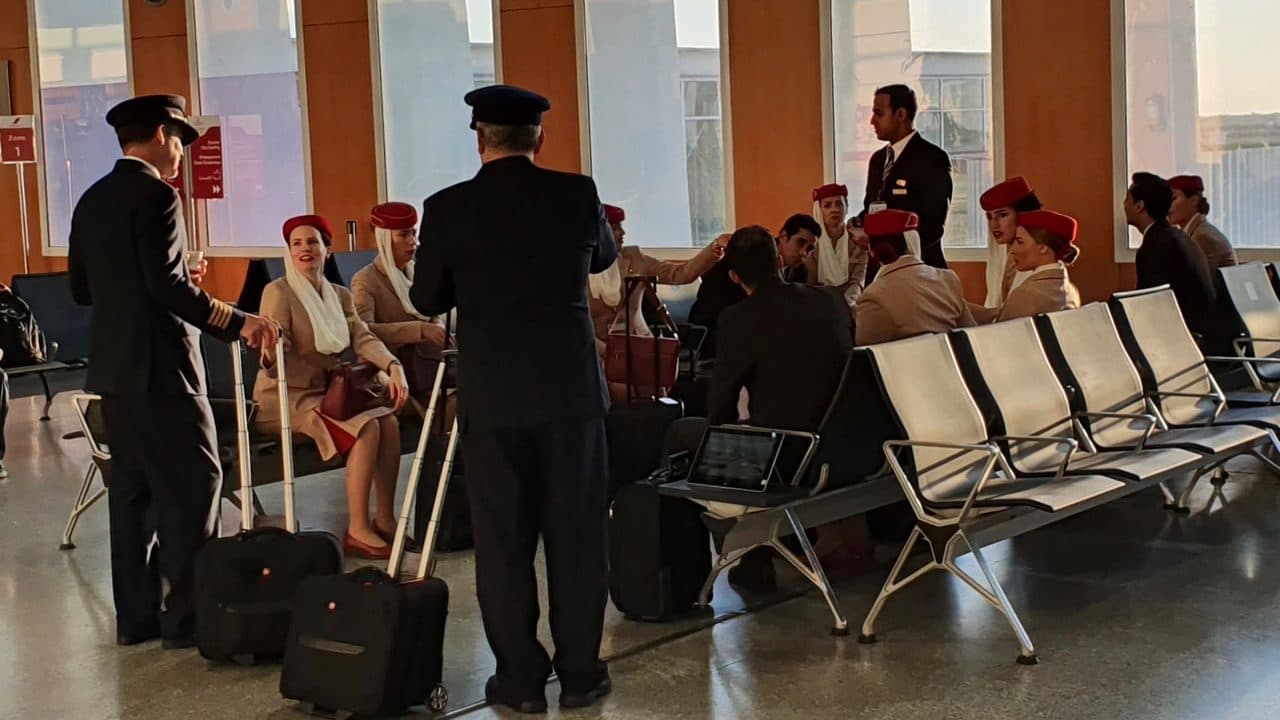
Photo: Yair Haklai · CC BY-SA 4.0 · Wikimedia Commons
Cabin crew career
Cabin Crew CV and Cover Letter: Applying for the Job
Published on
Even before thinking about the interview or the assessment day, your application has to clear a first hurdle: the CV and cover letter. Many candidates for the cabin crew profession overlook this step, even though it's decisive for getting that first contact with a recruiter. Here's how to put together an application that grabs attention.
Why a cabin crew CV is unlike any other
A CV for a cabin crew position doesn't follow the same logic as a standard CV. Recruiters aren't just looking for qualifications or years of experience, but for clues about your personality, your ability to work as part of a team and your approach to customer service. Every line should serve that purpose, even when it describes an experience with no direct link to aviation.
Experience dealing with the public takes centre stage: sales, catering, hospitality, events, front desk work. It shows you know how to handle varied, sometimes tense, situations with a smile. If you're coming from another sector, the goal isn't to hide these experiences but to reframe them to highlight transferable skills: stress management, a service mindset, autonomy.
Presentation matters a great deal too. A cabin crew CV should be clear, well spaced out, free of mistakes, with a professional photo if one is requested. Most airlines expect a specific format, sometimes in English, sometimes with a required layout. Before sending your application, always check these requirements on the relevant airline's recruitment website rather than guessing.
Structuring a cover letter that stands out
The cover letter remains a dreaded exercise, often because it falls back on ready-made phrases. Recruiters read dozens of letters that all sound alike, with everyone claiming to love travel and human contact. To stand out, it's better to share a concrete, personal detail that explains why you want to become cabin crew, rather than stringing together generalities.
Structure your letter in three simple parts. First, explain what draws you to this job, using a specific anecdote or experience. Then, show how your background has prepared you for its demands, citing concrete skills rather than abstract qualities. Finally, close by expressing your motivation to join this particular airline, not airlines in general.
Avoid letters that run too long. One page is more than enough, with short sentences and a direct tone. Recruiters don't have time to decode a dense text: they're looking for clear information about who you are and why you're applying to them specifically.
Tailoring your application to the type of airline
Not every airline expects the same kind of application. A low cost airline often values versatility, speed of execution and autonomy, since the pace of work there is demanding. A long haul or Gulf airline will place more emphasis on the multicultural dimension, the languages you speak and experience with high end service. Tailoring your CV and letter to these expectations increases your chances of being noticed.
This doesn't mean lying or inventing experiences, but choosing which elements of your background to highlight depending on the company you're targeting. If you're applying to several airlines at once, prepare several versions of your application rather than sending the exact same document everywhere.
Languages deserve a special mention. State your actual level precisely, without exaggerating, since it will be tested during the later stages of recruitment. Being honest about this from the start avoids unpleasant surprises at interview and builds a relationship of trust with the recruiter from the outset.
The mistakes that discredit an application
Certain mistakes come up again and again and are enough to rule out an application before it's even been fully read. Spelling mistakes top the list: in a job where communication is central, they create an impression of carelessness that's hard to shake off. Proofreading your application several times, and having someone else read it too, remains the best habit before sending it off.
An unsuitable photo, whether too casual or poor quality, also harms the first impression. Likewise, an overloaded CV, with unnecessary information or a confusing layout, makes it harder for the recruiter to read and works against you. Simplicity and readability should always take priority over the urge to say too much.
Finally, a generic application, clearly sent out in bulk without any tailoring, is easy to spot. Recruiters appreciate sensing that a candidate has at least some knowledge of the company they're applying to: its network, its positioning, its stated values. A few minutes of research before writing your letter often makes all the difference.
After sending it: staying ready and responsive
Once your application has been sent, the work isn't over. Response times vary a great deal depending on the airline and the recruitment period, ranging from a few days to several weeks. It's normal not to hear back straight away, but stay organised so you can respond quickly if you're contacted, particularly to arrange a phone interview or set a date for an assessment day.
Prepare in advance the documents you'll likely be asked for later: ID, qualifications, proof of language level, photos that meet the required standards. Having this ready to go avoids last minute stress and shows your seriousness if things move quickly after a first positive response.
If you haven't heard back after several weeks, it's perfectly acceptable to send a short, polite follow up. This shows your motivation without being pushy. Either way, keep applying elsewhere at the same time: sending out multiple applications remains the best strategy for maximising your chances of landing an interview.
Ready to apply
Open cabin crew jobs in Europecollected every morning from the airlines
Requirements and selection steps by airline: Air France, Transavia France, easyJet, Ryanair, Wizz Air.
Keep reading
Cabin crew career
Cabin Crew Recruitment: Mistakes to Avoid
Discover the most common mistakes that get candidates eliminated during cabin crew recruitment, and how to avoid them at every stage of the process.
Cabin crew career
Image and physical requirements in the cabin crew profession
Height, tattoos, uniform, posture: discover what the image and physical criteria required to become cabin crew really involve.
Cabin crew career
Changing Airlines as Cabin Crew: How to Do It Right
Changing airlines as a member of cabin crew takes preparation. Discover the key steps, the pitfalls to avoid, and how to make the most of your experience.