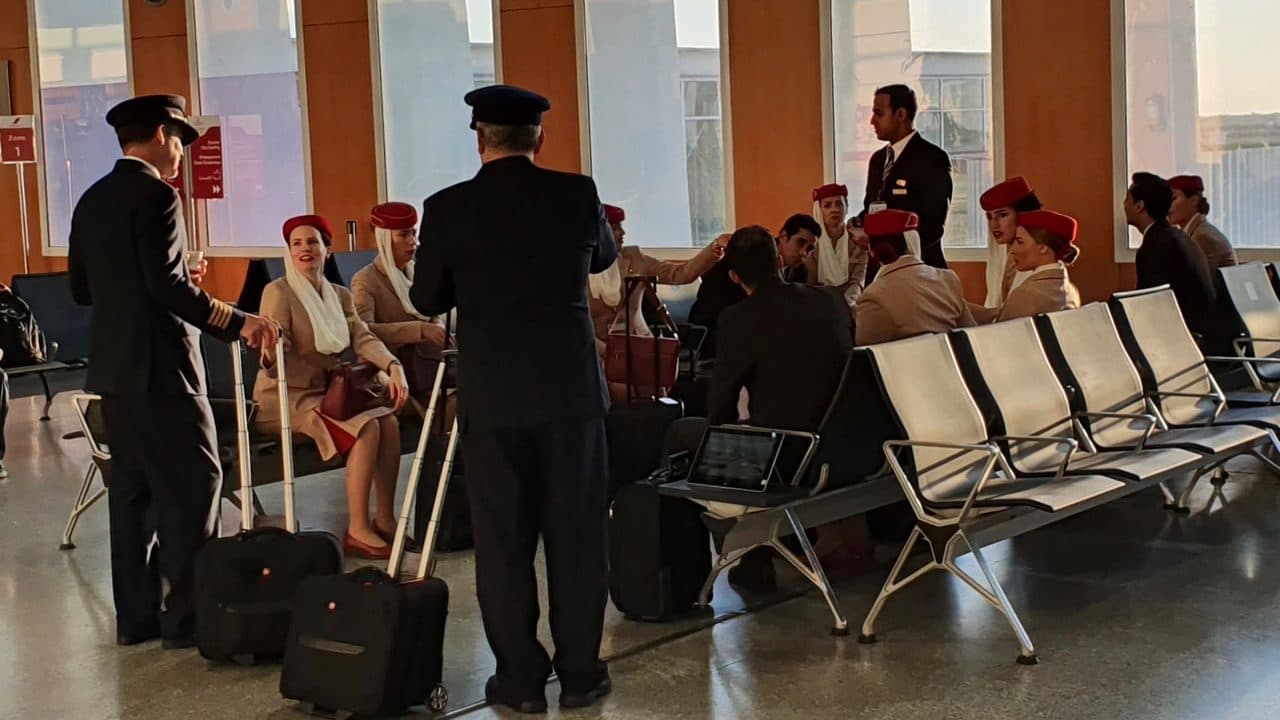
Photo: Yair Haklai · CC BY-SA 4.0 · Wikimedia Commons
Cabin crew career
Cabin Crew Recruitment: Mistakes to Avoid
Published on
Every cabin crew recruitment session sees otherwise qualified candidates get eliminated at the very first stages. It's not always a question of skills, but often of details that weren't properly anticipated. Here are the most common mistakes and how to avoid them, so you can put every chance on your side.
A sloppy application right from the start
Many candidates lose their chances before they're even called in, simply because they sent off a CV or cover letter too hastily. A generic CV, copied from a template found online without being adapted to the cabin crew profession, fails to highlight the right qualities: customer relations experience, stress management, teamwork, foreign language skills. Recruiters sort through hundreds of applications and immediately spot the ones that lack personalization.
The photo on your CV also deserves special attention. An outfit that's too casual, a poorly framed shot or a cropped holiday snap sends the wrong signal before a single line has even been read. Likewise, spelling mistakes in the cover letter are often a dealbreaker, since written accuracy is one of the qualities expected of cabin crew, particularly for writing reports or communicating with passengers.
Finally, some candidates apply to every airline with exactly the same letter, without adapting their message. A low-cost airline doesn't expect the same pitch as a premium long-haul carrier. Showing that you have at least some knowledge of the airline you're applying to often makes the difference right from this first step.
Showing up without physical or administrative preparation
Certain criteria are checked very early in the process, sometimes from the very first in-person contact with recruiters. The absence of visible tattoos in uniform, the reach height needed to access safety equipment, or the physical ability to swim are prerequisites you need to check before you even start, not discover on the day of the assessment. Showing up without having anticipated these points wastes valuable time, both yours and the recruiters'.
Your administrative file is another common pitfall. A passport valid for several years, a possible visa for certain flight zones, a clean criminal record: these documents are systematically requested, and their absence or any irregularity can stop a promising application in its tracks. It's far better to put this file together in advance rather than scrambling for paperwork once you've been called in.
Your overall presentation on the day also matters a great deal. An outfit that's too casual, unsuitable shoes, untidy hair: recruiters assess within the first few seconds whether you match the professional image expected. It's not about any particular physical appearance, but about the care you take to present yourself at your best.
Missteps during group exercises
Group exercises are designed to observe how each candidate behaves with others, and that's precisely where many get their strategy wrong. Trying at all costs to stand out by monopolizing the conversation, constantly interrupting others or forcing your own ideas through creates a negative impression, the opposite of the team spirit recruiters are looking for. On the other hand, staying too far in the background and never taking any initiative is just as damaging.
Another classic trap is treating other candidates as competitors rather than as teammates. Recruiters are looking for people who can value collective work, not candidates who put themselves forward at the group's expense. Encouraging a shyer participant, rephrasing an idea to clarify it, or offering a summary all show a genuine capacity for collaboration.
Body language also plays an important role during these exercises. Crossed arms, a shifting gaze, sighs of impatience or an absent smile are all signals that observers pick up on, sometimes without the candidate even realizing it. Keeping an open posture and a friendly expression throughout the exercise takes conscious effort, especially under the pressure of the clock.
Interview answers that are too rehearsed or too vague
In individual interviews, two pitfalls come up very often. The first is the answer learned by heart, recited without any naturalness, which sounds fake from the very first sentences. Recruiters ask precise questions specifically to get away from stock answers and see how you react in the moment. Over-preparing your answers word for word can therefore backfire if you lose your train of thought or if the question is phrased differently than expected.
The second pitfall is the opposite: answers that are too vague, with no concrete example. Saying you're “a calm person” or “comfortable with people” without illustrating it with a real-life situation convinces no one. Recruiters expect specific anecdotes, ideally drawn from professional or personal experience, that concretely show how you handled a conflict, an unexpected event or a tricky situation.
Many candidates also overlook the question of their deeper motivations. Answering only with the appeal of travel or unusual working hours gives a superficial impression of your approach. It's better to bring up a sense of service, a liking for teamwork or an interest in safety, elements that better reflect the reality of the job and what recruiters want to hear.
Mismanaging stress and silences
Stress is an integral part of the recruitment process, and how you handle it often says more about you than your answers themselves. Some candidates panic when faced with a recruiter's silence after an answer, and start filling the gap with disjointed sentences. A silence isn't necessarily a negative sign: it can simply be part of the observation method, used to see how you react to discomfort.
Other candidates, conversely, let excessive nervousness show through in ways that undermine their whole performance: speaking too fast, trembling hands, a wandering gaze. Working on your breathing before the interview, arriving early so you're not rushed, or simply accepting that stress is normal all help limit these effects. Recruiters aren't looking for candidates with no emotion, but for people able to keep their composure under pressure, just as they will need to in flight.
Finally, a common mistake is trying to hide your weaknesses rather than discussing them with some perspective. A candidate who can acknowledge a past difficulty and explain how they overcame it inspires far more confidence than a speech that's too polished, where everything seems perfect. Controlled transparency is always better than a facade that eventually cracks under follow-up questions.
Ready to apply
Open cabin crew jobs in Europecollected every morning from the airlines
Requirements and selection steps by airline: Air France, Transavia France, easyJet, Ryanair, Wizz Air.
Keep reading
Cabin crew career
Changing Airlines as Cabin Crew: How to Do It Right
Changing airlines as a member of cabin crew takes preparation. Discover the key steps, the pitfalls to avoid, and how to make the most of your experience.
Cabin crew career
Cabin Crew CV and Cover Letter: Applying for the Job
Find out how to build an effective cabin crew CV and cover letter to land an interview with airlines.
Cabin crew career
Cabin Crew Assessment Day: How It Works
Discover how a cabin crew assessment day unfolds: stages, group exercises, interviews and tips for approaching the day with confidence.