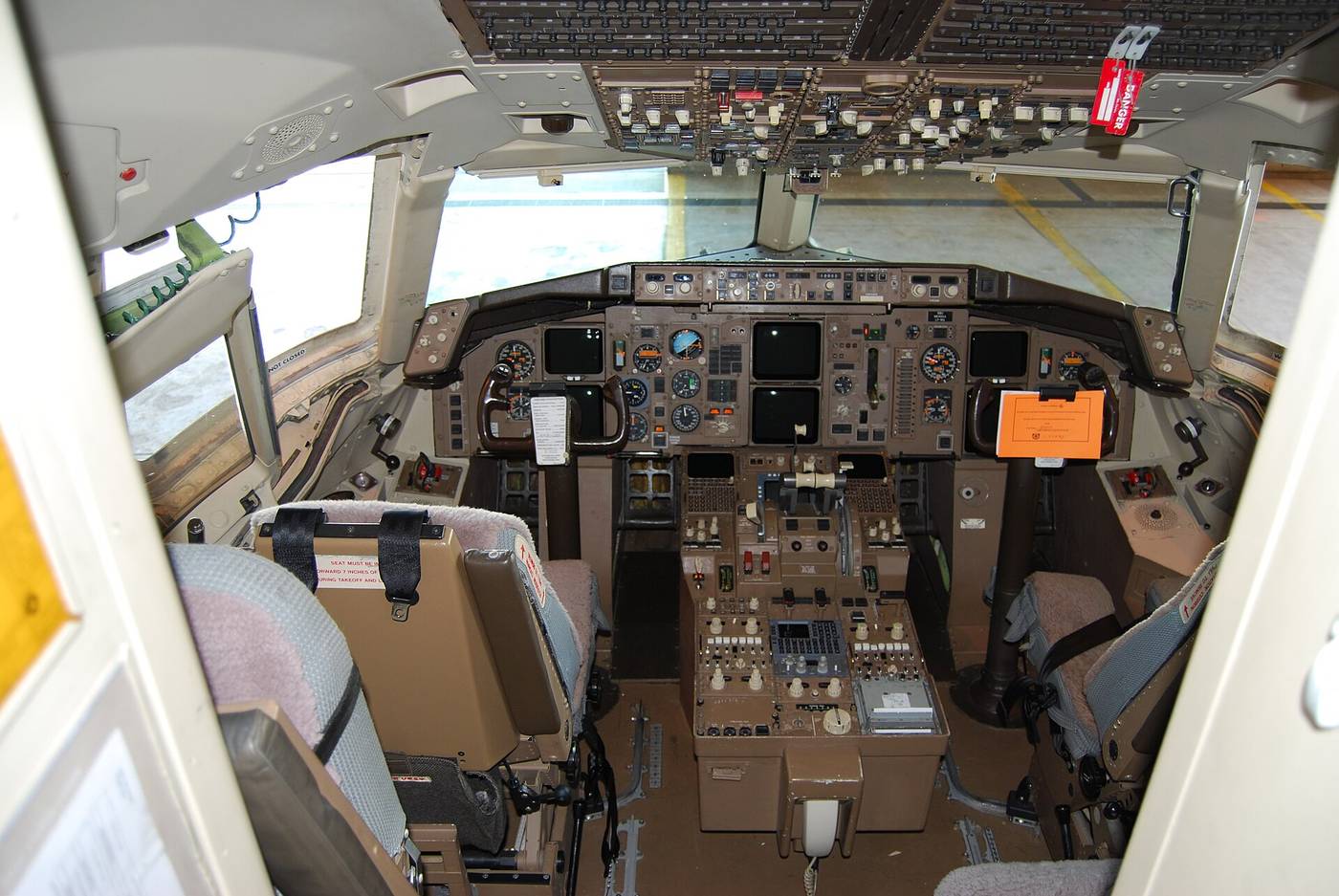
Photo: Bill Abbott · CC BY-SA 2.0 · Wikimedia Commons
CCA revision & exam
Emergency Communication for the CCA: Tone and Commands
Published on
In the CCA, emergency communication isn't about vocabulary, it's about efficiency: every word counts when seconds are scarce. Short announcements, clear commands and the right tone of voice form a package that the exam assesses precisely, often without candidates understanding why one phrasing is judged correct and another isn't. Here's how to approach this topic without getting it wrong.
Why emergency communication has its own rules
In normal situations, cabin crew communicate with passengers calmly and in detail, sometimes in a customer-service tone. In an emergency, this mode of communication becomes a hazard: long or nuanced sentences waste time nobody has. That's why regulations and procedures impose specific language for critical phases, designed to be understood instantly, even by passengers who are stressed, tired or not paying full attention.
This logic explains why the CCA tests form just as much as substance. A candidate can know the procedure perfectly and still get the exam question wrong simply because they chose a phrasing that was too long or too ambiguous. Understanding that brevity and clarity are themselves safety criteria changes how you approach this module, which isn't just about memorizing stock phrases.
Remember this simple principle: in an emergency, the quality of a communication is measured by how fast it's understood, not by how detailed it is. This is what separates a correct announcement from one that says essentially the same thing but takes too long for a stressed brain to process.
Short announcements: what the exam really expects
An effective emergency announcement meets three requirements: it informs, it directs action, and it takes only a few seconds. The CCA often tests your ability to spot, among several proposed phrasings, the one that meets all three criteria at once. A sentence can be correct in substance and still be eliminated because it contains an unnecessary detail, a superfluous explanation, or a turn of phrase that slows down understanding.
Candidates frequently assume that a more detailed announcement is more reassuring. In reality, the opposite happens: too much information scatters attention and delays action. The exam therefore rewards deliberately stripped-down phrasing that goes straight to the behavior expected from the passenger, rather than explaining the situation.
To revise this point, avoid learning sentences by heart without understanding how they're built. Instead, train yourself to identify, in each example, what counts as essential information and what could be cut without losing meaning. This method lets you reason through any unfamiliar phrasing on exam day, rather than hunting for a memorized sentence that doesn't quite match the question asked.
Clear commands: structure and function
An emergency command doesn't serve the same function as an informative announcement: it calls for immediate action, with no room for interpretation. Its structure must therefore eliminate any ambiguity about who needs to do what, and when. The CCA tests this by confronting you with phrasings that seem correct but leave room for doubt, for instance about exactly when to act or who the command is aimed at.
An effective command generally starts with the expected action, phrased in the imperative, without any justification built into the same sentence. Mixing the command with its explanation lengthens the message and delays the reaction, which defeats the purpose. The exam expects you to identify this separation between the instruction, which must be immediate, and the explanation, which can come afterward if time allows.
A common mistake is confusing firmness with aggressiveness when phrasing commands. A clear command isn't necessarily harsh: it's precise, repeated if needed, and phrased so as to leave no room for hesitation. Understanding this distinction helps you answer questions correctly when several variants of the same command are proposed, only one of which truly meets the expected criteria.
Tone of voice: a component in its own right
The content of a message is only part of emergency communication: tone of voice is the other component, and the CCA doesn't overlook it. A tone that's too hesitant can make passengers doubt the seriousness of the situation, while a panicked tone can trigger collective panic, which works against evacuation or securing the cabin. The goal is a tone that's firm, steady and audible, conveying urgency without conveying panic.
This requirement rests on a human factors principle you'll find elsewhere in the CCA: passenger behavior is largely guided by that of cabin crew. A confident voice, even in a genuinely critical situation, encourages a coordinated response. Conversely, a voice that betrays doubt or alarm can slow down, or even block, the execution of the instructions given.
On this point, the theory exam can only assess your understanding of the principle, not your actual ability to modulate your voice, which is more a matter for practical assessments and later training at the airline. So remember the general idea: tone is an integral part of the message, just as much as the words chosen, and a question may focus on the expected effect of a given tone rather than on the content of the announcement itself.
Common mistakes and a revision method
The first mistake is treating this topic as a list of sentences to memorize, without understanding the logic behind them. Faced with unfamiliar phrasing on exam day, this reflex of recitation stops working, and the candidate is left stuck. It's better to practice analyzing why a sentence is considered effective, so you can apply that reasoning to any example.
The second mistake is confusing this topic with the broader aeronautical communication module, which also covers the phonetic alphabet and technical exchanges between cabin crew and the flight deck. Emergency communication aimed at passengers follows a different logic, centered on immediate action and managing collective behavior, not on the precision of a code shared between professionals.
To revise effectively, alternate between reading the illustrated course materials available at forallpnc.fr/cours-cca, which break down how these messages are built, and the free quizzes by module at forallpnc.fr/qcm-cca, which confront you with variants of similar phrasings. Finish your preparation with the free 70-question mock exam at forallpnc.fr/examen-blanc-cca, which mixes this topic in with other modules, exactly as the real exam will. If some nuances still feel unclear, the AI Instructor can help you clarify why one precise phrasing is chosen over another.
Keep reading
CCA revision & exam
CCA Human Factors: Fatigue, Stress, Error
Fatigue, stress, human error: understand the key concepts of the CCA human factors module and avoid common multiple-choice pitfalls.
CCA revision & exam
CCA Cabin Security: Threats and the Right Reflexes
Review cabin security for the CCA exam: types of threats, spotting suspicious behaviour and the response principles expected in the cabin.
CCA revision & exam
CCA brace positions: the underlying logic
CCA brace positions: why every movement exists, not just how to reproduce it. The method for understanding and permanently memorizing these