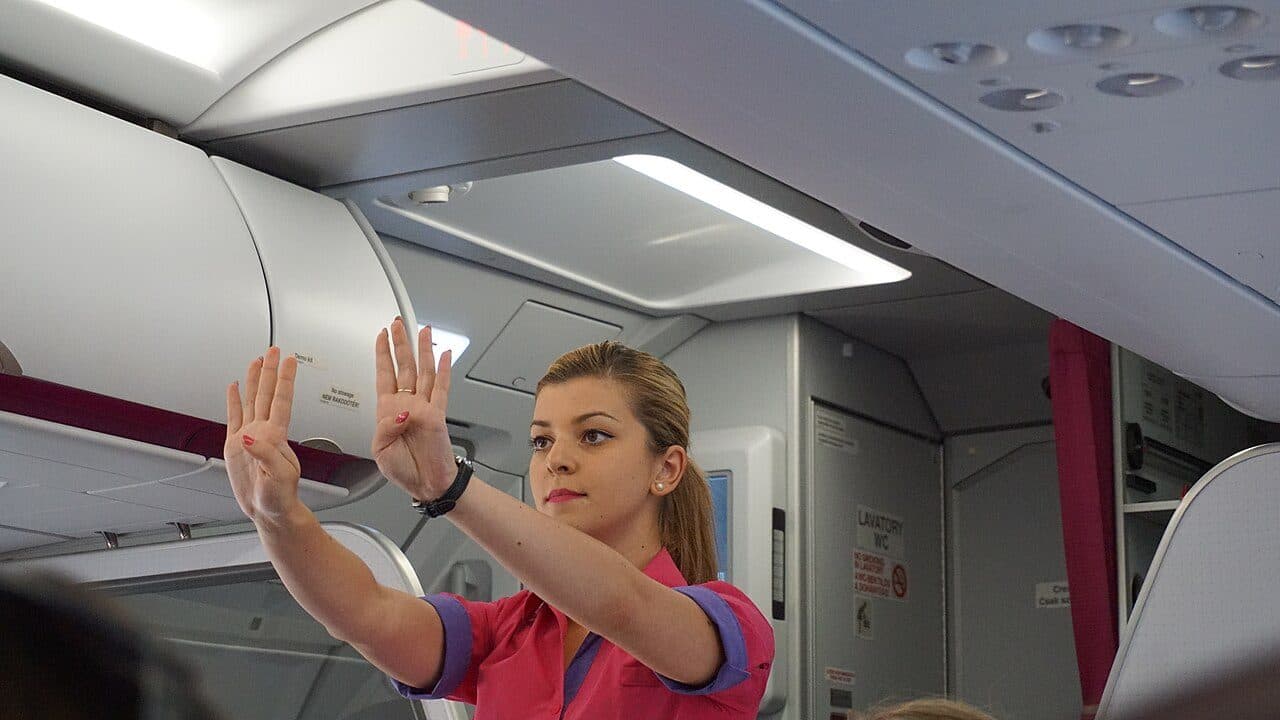
Photo: Miguel Discart · CC BY-SA 2.0 · Wikimedia Commons
Cabin crew career
Short-haul or long-haul cabin crew: what are the differences for your career?
Published on
Once you've got your CCA (Cabin Crew Attestation) in hand, one question quickly comes up: is it better to aim for short-haul or long-haul flights? These two realities of the cabin crew job don't have much in common, whether it's the pace of life, the duties on board or the career prospects. Here's an overview to help you choose your path.
Work pace: a major difference
On short-haul flights, the day is often split into several flights, sometimes three or four rotations before heading home to sleep in your own bed that same evening. This pace calls for strong adaptability, since turnarounds are short and back-to-back flights leave little time to recover between duties.
Long-haul works differently. A single flight can last several hours, followed by a layover of one to several days in a foreign city before the return flight. This format means fewer rotations but longer duty periods, with regular night work and jet lag to manage.
Some figures from Onisep
Onisep gives a few benchmarks on the pace of the job: full time, the baseline is 60 to 80 flight hours per month, with highly irregular schedules, days that can start at dawn or end very late, and regular work on weekends and public holidays.
On a very long-haul flight, cabin crew can stay airborne for 18 hours straight, with a few breaks. The layovers that follow are mainly devoted to rest, made necessary by the fatigue of repeated time zone changes and prolonged periods on your feet. These benchmarks apply to the profession as a whole: your actual schedule will depend on your airline and your contract.
Life on board isn't the same
On a short-haul flight, service is intense and compressed into a short amount of time. You need to be efficient and fast, managing a packed cabin in minimal time, often without the chance to build much of a connection with each passenger.
On board a long-haul flight, service unfolds over several hours and usually includes multiple rounds: meals, drinks, duty free, entertainment. The relationship with passengers is different, spread out over a longer time, which calls for a different kind of stamina, especially to stay attentive and smiling over a much longer flight time.
Crew teams and organization on board
On a short-haul flight, the crew is small, sometimes just four to six people depending on the aircraft type. This creates a tight-knit group dynamic where everyone quickly gets to know each other's habits, even though crews often change from one flight to the next.
On a long-haul flight, the crew is larger and organized into several cabin zones, sometimes with a purser coordinating the whole team. This setup requires more formalized communication between the different positions, particularly during in-flight rest rotations.
What impact on your personal life?
Short-haul generally lets you sleep at home more regularly, which can suit those who want to keep a stable family life or routine. On the other hand, the days can be tiring, with very early departures or late returns.
Long-haul offers more free time between rotations, with layovers that sometimes allow you to explore a destination over several days. But extended time away from home and repeated jet lag call for good personal organization and the ability to manage fatigue linked to time zone changes.
How should you guide your choice?
There's no right or wrong option in absolute terms: it all depends on your priorities and lifestyle. Some airlines operate only short-haul routes, others only long-haul, and some allow movement between the two over the course of a career, often after several years of seniority.
Before deciding, find out about the type of fleet operated by the airlines that interest you and the possibilities for moving between segments internally. This factor can weigh just as much in your choice as a specific role or home base.
Keep reading
Cabin crew career
A day in the life of cabin crew: what a working day actually looks like
Discover what a working day for cabin crew really involves, from briefing to debriefing, on both short-haul and long-haul flights.
Cabin crew career
Cabin Crew Salary: Pay and Benefits
Cabin crew salary: base pay, bonuses and benefits, with the Onisep benchmark: starting from €1,867 gross per month for a beginner.
Cabin crew career
Cabin crew abroad: working outside France
Want to work as cabin crew abroad? Discover the steps, contracts and realities of international mobility in the cabin.