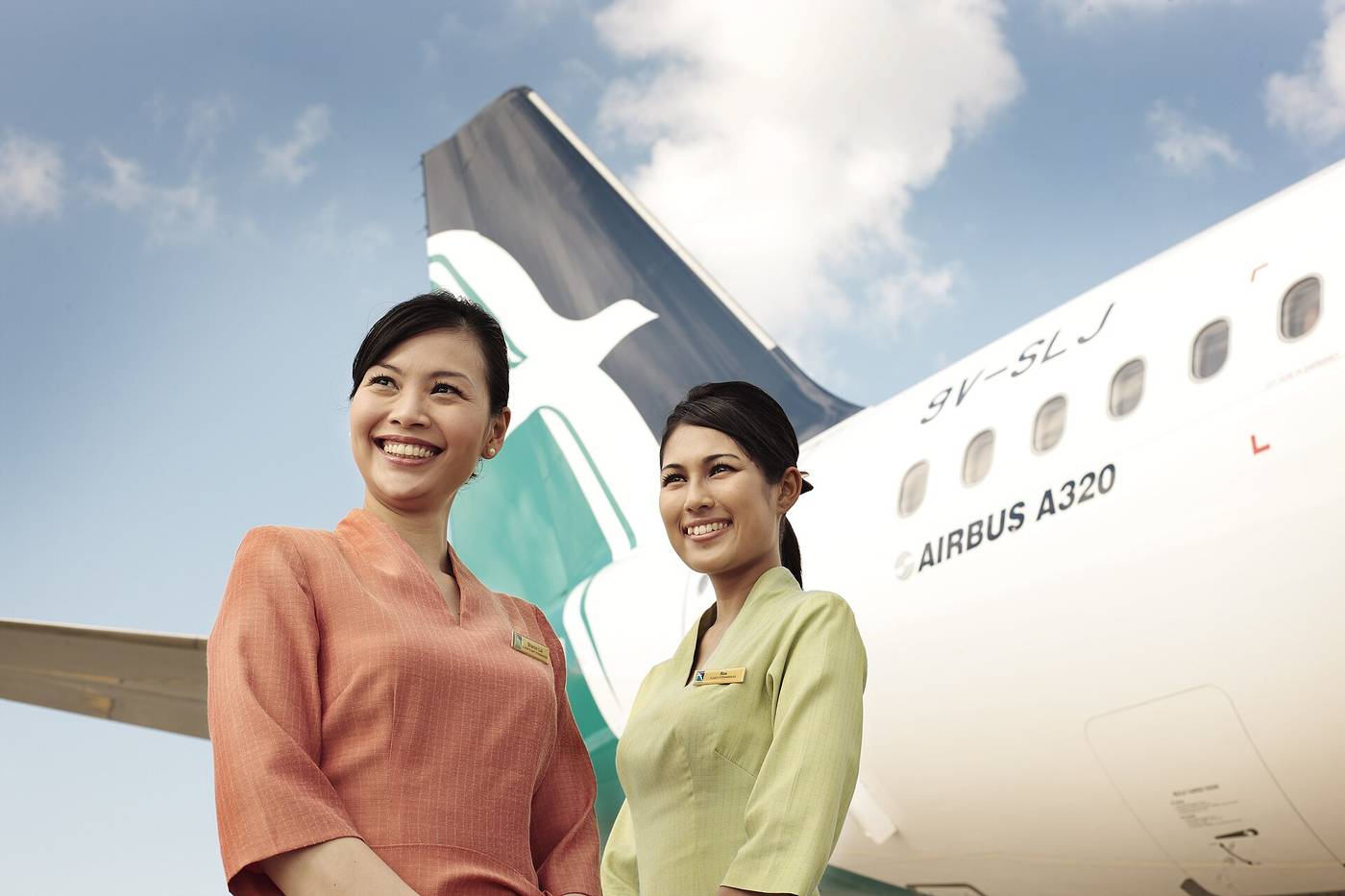
Photo: SilkAir (S) Pte Ltd · CC BY 3.0 · Wikimedia Commons
Cabin crew career
Cabin Crew Soft Skills: The Essential Qualities
Published on
The CCA (Cabin Crew Attestation) validates your technical skills, but airlines hire personality first. Personal qualities often weigh more heavily than the CV in the final decision. Here are the soft skills that truly make a difference when it comes to becoming cabin crew.
Why soft skills matter just as much as theory
The cabin crew job rests on two inseparable pillars: mastering safety procedures and knowing how to handle people. A candidate might know the fire safety module or the aeromedical module inside out, but if they can't reassure an anxious passenger or defuse a conflict on board, they'll quickly run into trouble. Recruiters know this, which is why selection interviews focus so much on behaviour as well as knowledge.
An airline isn't just hiring someone to carry out safety instructions. It's hiring someone who will represent its image for hours on end, in front of dozens of passengers with very different expectations and moods. That's why personal qualities are observed from the very first interactions, sometimes even before the formal interview, during group exercises or role-play scenarios.
Unlike a technical skill, a soft skill can't be learned from a manual. It develops over time, through experience and self-awareness. Many candidates underestimate this and focus solely on revising the CCA modules, when in reality a panel can spot a lack of perspective or maturity within just a few minutes.
Service mindset: a non-negotiable quality
A strong service mindset is probably the quality most sought after in future cabin crew. It's not just about being polite or smiling, it's about anticipating a passenger's needs before they even voice them. This attentiveness shows up in simple gestures: offering a blanket to someone who looks cold, noticing a bored child, or adjusting your tone for someone anxious about the flight.
This service mindset needs to stay consistent, even in tense situations. A delay, a missed connection or an unhappy passenger should never turn professional composure into visible indifference or irritation. Recruiters often test this through role-play scenarios simulating a difficult customer, to observe the candidate's spontaneous reaction.
Finally, having a service mindset also means knowing how to stay available without ever fading into the background. Cabin crew remain responsible for safety and order on board, so they need to combine warmth with firmness when the situation calls for it, all while keeping their composure.
Staying calm and managing stress in real situations
The ability to stay calm under pressure is a quality airlines assess very closely. In flight, a technical incident, severe turbulence or a passenger feeling unwell can happen without warning. In these moments, cabin crew must keep applying the procedures learned during the CCA while maintaining a steady voice and controlled movements, since the crew sets the tone for the whole cabin.
Staying calm doesn't mean feeling no emotion, it means being able to channel it to act effectively. Instructors often stress this point: cabin crew who visibly panic risk passing their stress on to passengers, which can make an already tense situation worse. A composed attitude, on the other hand, reassures people and makes it easier to manage the incident as a group.
During recruitment interviews, panels deliberately use stressful role-play scenarios to observe reactions. They're not looking for a complete absence of nerves, but for the ability to regain composure quickly and structure a response. This emotional resilience is often what sets successful candidates apart from the rest.
Adaptability and teamwork
Cabin crew regularly change crew, destination and sometimes even aircraft type depending on the airline. This variability calls for strong adaptability, both in terms of relationships and logistics. Working with colleagues you've never met, quickly fitting into a new group dynamic, and staying effective despite constantly shifting reference points, are all part of the job.
Teamwork is inseparable from this adaptability. On board, every crew member has a specific role, but flight safety depends on coordination between all of them. A lack of communication or poor relationships can have far more serious consequences than in most other jobs. That's why recruiters pay close attention to how a candidate behaves within a group, whether they listen and contribute, or instead push their own views without considering others.
This quality can also be developed ahead of recruitment, particularly through volunteering, team sports or professional experiences that involve regular teamwork. Candidates often highlight these experiences during interviews to give concrete examples of their ability to collaborate.
How to develop these qualities before recruitment
Contrary to popular belief, soft skills aren't fixed from birth. They're cultivated through self-observation and practice in real situations. Working in sales, hospitality or any other customer-facing role already helps build a solid service mindset, one that transfers directly to a career as cabin crew.
Practising role-play scenarios, alone or in a group, also helps you manage interview stress more effectively. Simulating an unhappy passenger, a medical emergency or simply an unusual request helps you become aware of your natural reflexes and adjust them if needed. This kind of preparation complements the revision of CCA theory modules very well.
Finally, asking people around you for feedback on how you communicate or react under pressure is a simple exercise that's often overlooked. Once identified and worked on, these personal qualities become a real differentiator compared to other candidates who may know the theory inside out but neglect this dimension, one that is actually decisive in the selection process.
Keep reading
Cabin crew career
Acing Your Flight Attendant Recruitment Interview
The key stages of the cabin crew recruitment process, plus our tips for approaching your airline selection interview with confidence.
Cabin crew career
Cabin Crew Assessment Day: How It Works
Discover how a cabin crew assessment day unfolds: stages, group exercises, interviews and tips for approaching the day with confidence.
Cabin crew career
Career change: how to become cabin crew after another profession
Thinking about retraining to become cabin crew? Discover the key steps, the strengths of your background and how to succeed in this transition.