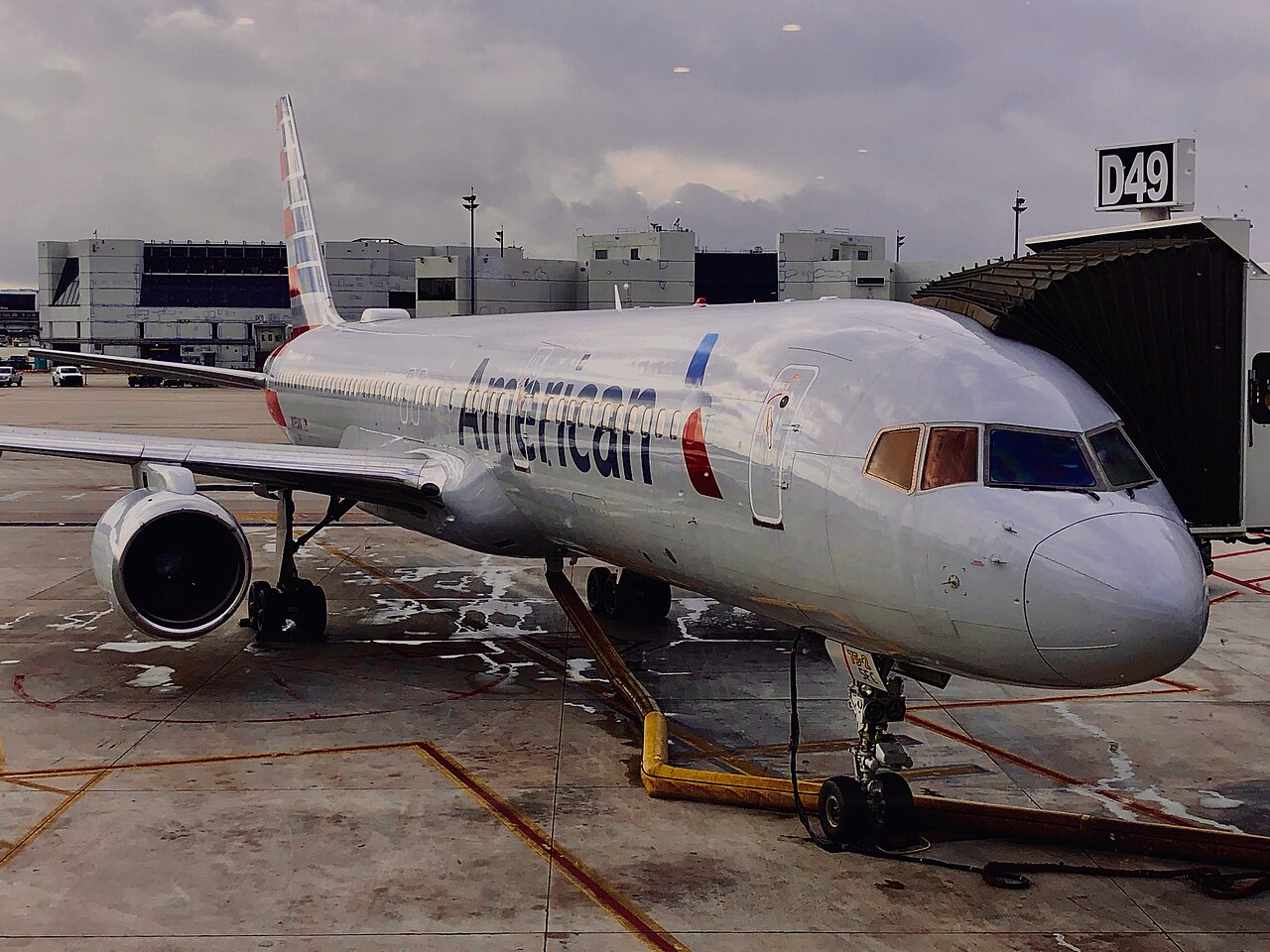
Photo: MackenzieKram · CC BY-SA 4.0 · Wikimedia Commons
Aviation news
FAA Orders Inspections on 757s: What It Means for Cabin Crew
Published on
The FAA has just imposed new structural inspections on hundreds of American Boeing 757s after cracks were discovered in fuselage frames that had already been repaired. It sounds like a purely technical announcement, but it actually sheds light on something every CCA (Cabin Crew Attestation) candidate needs to understand: the quiet, ongoing work that keeps an aircraft airworthy, and the role cabin crew play when that work reaches its limits.
What the FAA has decided
According to Air Journal, the Federal Aviation Administration has ordered new structural checks on 427 Boeing 757s registered in the United States, after cracks were found in fuselage frames that had, in fact, already been repaired. The airworthiness directive will come into effect on 28 December 2026. The airlines affected had requested a further three-year extension to address some of these repairs, a request the US authority turned down.
This kind of decision illustrates a key mechanism in air transport: an aircraft never flies indefinitely on the basis of its original type certificate alone. It's monitored continuously, with airworthiness directives added over time, often after an incident, a routine check or an analysis of operational data reveals a weakness. The Boeing 757, the first examples of which date back to the 1980s, remains in service with many operators, which makes this kind of ongoing monitoring particularly important.
For a CCA candidate, this news isn't just an engineering curiosity. It's a reminder that flight safety rests on a chain of checks that begins long before passengers board, and that cabin crew are part of the continuation of that chain once they're on board.
Why a fuselage crack matters to cabin crew too
A candidate preparing for the CCA might wonder how a crack in a fuselage frame, repaired or not, is any of their concern, given that they're neither a mechanic nor an engineer. The answer lies in the very logic of the job: cabin crew don't work on the aircraft's structure, but they are the last human link capable of detecting an anomaly in flight and reporting it correctly to the technical crew.
The CCA's aviation regulations module covers exactly this connection between airworthiness, maintenance and operations. An aircraft only takes off if it's deemed airworthy by the technical services, but that status isn't fixed: it depends on continuous upkeep, scheduled checks and corrective directives like the one the FAA has just issued. Understanding this mechanism helps clarify your own responsibility: observe, report, and never downplay an unusual noise or an abnormal sensation in the cabin.
This shared vigilance between the technical crew and the cabin crew is a principle that EASA and the DGAC regularly stress in their safety guides: every link in the chain contributes to the early detection of a problem, even without technical expertise.
Airworthiness directives: vocabulary worth knowing
The CCA doesn't require you to master the technical detail of an airworthiness directive, but it does expect candidates to understand what the term covers. Such a directive is a regulatory requirement issued by a civil aviation authority, mandating corrective action on a given aircraft type within a specific timeframe. It can involve an inspection, a repair, or even a restriction on use pending a permanent fix.
In the case of the Boeing 757s targeted by the FAA, the action concerns areas that have already been repaired, which shows that a maintenance intervention is never an absolute, final guarantee: it's itself subject to ongoing monitoring. This is a point many candidates overlook, assuming maintenance is a closed matter once an aircraft is back in service.
This vocabulary comes up regularly in exam-style questions for the regulations module. Knowing how to distinguish an airworthiness directive from a simple technical recommendation, or understanding why a regulatory deadline applies even in the face of economic pressures, is part of the knowledge cabin crew need in order to understand their role within the broader system of aviation safety.
The cabin crew's role in reporting an anomaly
Beyond this specific 757 case, this news is a good opportunity to revisit a core, cross-cutting skill of the job: reporting an anomaly observed in the cabin. An unusual noise coming from the structure, an abnormal vibration, a suspicious smell or anything else out of the ordinary must be reported to the flight crew following a precise procedure, without delay and without downplaying the information for fear of being a bother.
This rigor in reporting is taught from the very start of CCA training, particularly in the modules covering aeronautical communication and human factors. It rests on a simple principle: cabin crew aren't there to judge the technical severity of a phenomenon, only to describe it accurately so that qualified personnel can assess it. This distinction between observation and diagnosis is exactly what exam-style questions often aim to test.
It's also a useful reminder for anyone considering a cabin crew career: the job combines passenger service with constant operational vigilance, even on matters that might seem, at first glance, to be purely a maintenance issue.
Preparing for the exam without losing sight of the real world
Following this kind of aviation news during your CCA revision has a double benefit. On one hand, it grounds sometimes abstract regulatory concepts in real situations, which makes them easier to remember. On the other, it builds a reflex you'll carry throughout your career: understanding the technical and regulatory context in which the aircraft you work on operates, without needing to become a maintenance expert.
To help structure this knowledge, ForAllCabinCrew offers a free quiz for each module at /qcm-cca, as well as a free 70-question mock exam at /examen-blanc-cca to assess where you stand across the whole syllabus. The illustrated courses available at /cours-cca cover the aviation regulations module and communication during anomaly situations in detail, two topics directly linked to this airworthiness directive news. If you'd prefer more personalized support, the AI Instructor lets you dig deeper into a specific topic at your own pace.
If you're already actively job-hunting for a cabin crew position, check out the listings updated daily at /recrutement-hotesse-de-l-air, as well as the airline profiles at /compagnies to learn more about fleets and the profiles airlines are looking for.
Keep reading
Aviation news
Air France-KLM Is Changing Its Name: What You Need to Know
Air France-KLM will unveil a new name for its holding company on December 3. Here's what it means and what it changes for the group's cabin crew candidates.
Aviation news
Air France-KLM / SAS: what it means for cabin crew
Air France-KLM is preparing to take control of SAS. Here's what this expansion means for the group's cabin crew and CCA (Cabin Crew Attestation) candidates.
Aviation news
Plus Ultra Suspends Flights: A Lesson for Cabin Crew
Plus Ultra has suspended its flights due to a lack of funding. This real-world case sheds light on what a CCA candidate should know about the fragility of today's airline industry.